
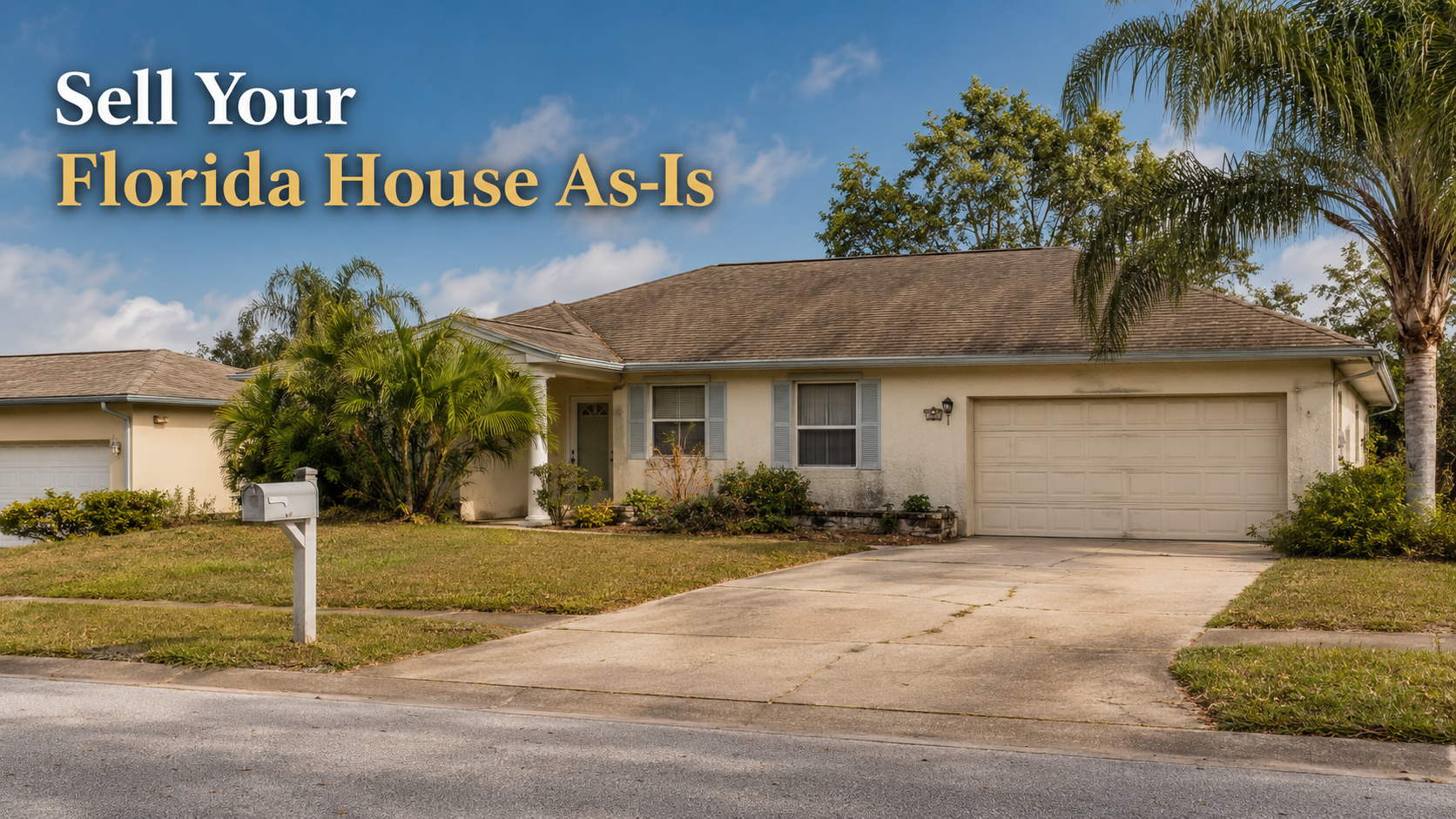
If your Florida house needs a new roof, updated kitchen, plumbing work, fresh paint, or a complete cleanout, you may feel like repairs are the only way to sell it.
They are not.
Florida homeowners generally have more than one way to sell a property that needs work. You can repair the house before listing it, list it in its current condition, or sell it directly to a buyer willing to purchase it as-is.
The right option depends on the condition of your house, how quickly you need to sell, and whether completing repairs would produce enough additional money to justify the expense and delay.
What Does Selling a House As-Is Mean?
Selling a house as-is generally means offering the property in its current condition without agreeing to make repairs or improvements before closing.
The buyer understands that the house may need work. Depending on the agreement, the buyer may still inspect the property, review its condition, and decide whether to proceed under the terms of the contract.
An as-is sale can allow you to avoid projects such as:
- Replacing an old roof
- Repairing air-conditioning systems
- Updating an outdated kitchen or bathroom
- Replacing damaged flooring
- Correcting cosmetic damage
- Cleaning out unwanted belongings
- Repairing drywall or interior paint
- Landscaping an overgrown yard
- Addressing damage left by tenants
- Preparing the property for repeated showings
Selling as-is does not mean that property condition is irrelevant. It means the buyer considers the home’s current condition when determining what they are willing to pay.
Can You Sell a Florida House Without Making Repairs?
Yes. A Florida house does not have to be completely renovated before it can be sold.
The real question is whether the house qualifies for the buyer’s intended method of financing. Some traditional buyers depend on a mortgage, and the property may need to meet the lender’s requirements. Serious roof, electrical, plumbing, structural, or safety issues can make conventional financing more difficult.
A cash buyer does not rely on a mortgage approval for the purchase. This can make it possible to buy properties that need substantial repairs or may not appeal to a traditional owner-occupant.
Homes commonly sold without repairs include:
- Inherited properties
- Vacant houses
- Rentals with deferred maintenance
- Fire- or water-damaged properties
- Houses with outdated interiors
- Properties with code violations
- Homes affected by foreclosure
- Houses filled with unwanted belongings
- Properties with unpermitted additions
- Homes occupied by difficult tenants
- Properties an owner can no longer maintain
The property does not have to be perfect. However, the title, ownership, liens, and closing requirements must still be addressed before the sale can be completed.
Three Ways to Sell a House That Needs Work
Repair the House and List It
One option is to complete the repairs and list the property with a real estate agent.
This approach may produce a higher sale price if the repairs are completed properly and buyers respond well to the property. However, the higher price is not automatically the same as a higher amount in your pocket.
Before choosing this route, consider:
- The cost of materials and labor
- The possibility of repair costs increasing
- Real estate commissions
- Seller-paid closing costs
- Mortgage payments during the listing period
- Property taxes, insurance, utilities, and maintenance
- Buyer-requested repairs after an inspection
- The possibility that the buyer’s financing could be delayed or denied
Renovating before selling may make sense when you have sufficient money, time, and experience to manage the work.
List the House As-Is
You can also list the property without completing major repairs.
Listing as-is exposes the house to the open market, but buyers may still request inspections, price reductions, closing credits, or contract cancellations depending on the agreement. Some buyers may also have difficulty obtaining financing if the property has significant defects.
This option may work for an owner who wants market exposure and is comfortable allowing showings, waiting for a buyer, and working through the inspection and financing process.
Sell Directly to a Cash Buyer
A direct cash sale may be appropriate when speed, convenience, and certainty are more important than pursuing the highest possible listing price.
A cash buyer typically evaluates the property’s current condition, estimates the necessary repairs, reviews comparable property sales, and presents an offer based on those factors.
With the right agreement, the homeowner may be able to avoid:
- Repairing or renovating the house
- Hiring contractors
- Cleaning out the entire property
- Staging the home
- Holding open houses
- Accommodating repeated showings
- Paying real estate commissions
- Waiting for a buyer to obtain mortgage approval
The tradeoff is that a cash offer will normally account for the repairs, carrying costs, resale risk, and other expenses the buyer expects to assume.
Does As-Is Mean You Can Avoid Disclosing Known Problems?
No. Selling a house as-is should not be treated as permission to conceal a known problem.
Florida sellers may have disclosure obligations concerning known facts that materially affect the property’s value and are not readily observable to a buyer. Certain disclosures may also be required by statute or the circumstances of the transaction.
Tell the buyer about known material issues and answer property-related questions honestly. If you are uncertain about your obligations, consult a qualified Florida real estate attorney.
The purpose of an as-is transaction is to establish who will be responsible for repairs—not to hide defects.
How Quickly Can an As-Is Cash Sale Close?
The closing timeline depends on the property and the seller’s circumstances.
A straightforward transaction may close considerably faster than a traditional financed sale. However, additional time may be necessary when the property involves:
- Probate or a deceased owner
- Multiple heirs or owners
- An active foreclosure
- Unpaid property taxes
- Municipal or code-enforcement liens
- Open permits
- Judgments or other title defects
- A tenant who still occupies the property
- Bankruptcy proceedings
- An unresolved mortgage payoff
- Missing ownership documents
A responsible buyer should not promise an unrealistic closing date before reviewing the ownership and title situation.
In some cases, speed is the main concern. In others, the homeowner needs additional time to move, locate documents, coordinate with relatives, or arrange a new residence. The closing date should reflect what the parties can realistically accomplish.
What Can You Leave in the House?
In some direct cash transactions, the buyer may agree to purchase the property with unwanted furniture, appliances, boxes, or other personal belongings left behind.
Never assume everything can remain without discussing it first. The purchase agreement should clearly state what will stay, what you will remove, and whether the property must be vacant at closing.
You should always remove:
- Identification documents
- Financial records
- Family photographs
- Medication
- Jewelry
- Firearms
- Personal items you wish to keep
- Anything containing sensitive information
If a buyer agrees to handle the remaining cleanout, have that understanding documented in writing.
How Is a Cash Offer Calculated?
There is no universal formula used by every buyer. A serious cash buyer will generally consider:
- The property’s location
- Recent comparable sales
- The home’s current condition
- The estimated cost of repairs
- Outstanding liens or title complications
- Holding and resale expenses
- Market demand
- The time and risk involved in completing the project
Do not compare offers based only on the number at the top of the page. Compare what you are likely to receive after the entire transaction is completed.
Ask whether the offer includes or excludes:
- Real estate commissions
- Seller closing costs
- Repair expenses
- Cleanout costs
- Inspection-related deductions
- Buyer financing contingencies
- Assignability of the contract
- Unpaid taxes, liens, or mortgage balances
A lower offer with clear terms and fewer deductions may sometimes produce a more predictable result than a higher offer containing uncertain conditions.
Questions to Ask Before Accepting a Cash Offer
Before signing a purchase agreement, ask the buyer:
Is the offer actually in writing?
A verbal estimate is not a purchase agreement. Review the complete written offer before making a decision.
Are there inspection or cancellation periods?
Determine whether the buyer can cancel after inspecting the house and how long that right lasts.
Who will pay the closing costs?
The contract should identify which expenses belong to the buyer and which belong to the seller.
Are there any commissions or service fees?
Ask for an explanation of every fee or deduction that may affect your proceeds.
Is the buyer purchasing the property directly?
Find out who is signing the agreement and whether the contract allows the buyer to assign their rights to someone else.
Will the offer change after the inspection?
The buyer should explain how property condition could affect the price before you sign.
When will the closing occur?
The closing date and any extension rights should be written clearly in the agreement.
Who will handle the title work?
A title company or real estate attorney typically examines ownership, liens, mortgages, taxes, and other matters that could affect the transfer.
How to Prepare for an As-Is Sale
You may not need to renovate the house, but a few preparations can make the transaction easier.
Gather Property Documents
Locate any available mortgage statements, tax notices, probate documents, leases, repair invoices, insurance claims, code notices, and association information.
Identify Everyone on the Title
Every legal owner may need to participate in the transaction. Divorce, death, inheritance, trusts, and prior deeds can affect who has authority to sell.
List the Problems You Know About
Prepare an honest list of known property issues. This can help the buyer evaluate the house and reduce surprises later.
Decide What You Need From the Sale
Determine whether your priority is speed, convenience, additional time to move, avoiding repairs, or receiving the highest possible net amount.
Review the Entire Agreement
Do not rely solely on what someone says over the phone. Read the price, deposits, contingencies, closing date, access provisions, and cancellation terms.
Consider having a Florida real estate attorney review the agreement if you do not understand its terms.
Is Selling As-Is the Right Decision?
An as-is cash sale is not the best choice for every homeowner.
Repairing and listing the property may be better when the house needs only minor work, you have money available for improvements, and you are comfortable waiting for a traditional buyer.
Selling directly may deserve consideration when:
- The property requires extensive repairs
- You cannot afford the renovations
- You inherited a house you do not want
- The property is vacant or attracting violations
- You live outside Florida
- Tenants damaged the property
- You are behind on the mortgage
- A foreclosure deadline is approaching
- You want to avoid showings and inspections
- You need a more predictable closing process
The best decision is the one that fits your timeline, property condition, and financial goals.
Sell Your Florida House As-Is With Visionary Estates
Visionary Estates purchases Florida properties in their current condition. You do not have to renovate the house, stage it, or prepare it for repeated showings before asking us to evaluate it.
We will review the property, discuss your situation, and explain the proposed terms so you can decide whether a direct sale works for you. There is no obligation to accept an offer.
Call Visionary Estates at (813) 322-6656 or visit https://visionaryestateshq.com/ to discuss selling your Florida house as-is.