
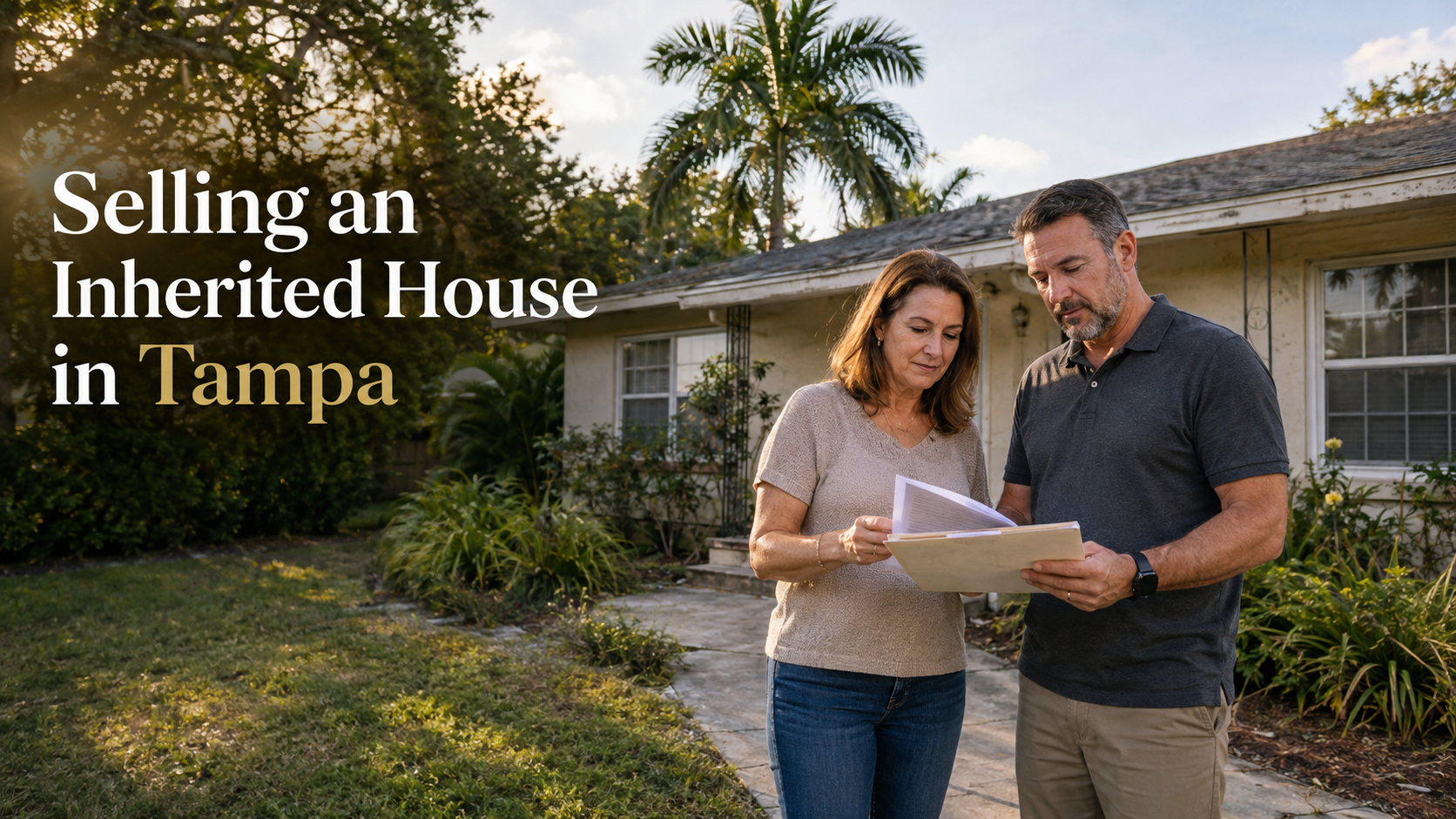
Inheriting a house in Tampa can create an opportunity, but it can also leave a family responsible for a property they were not prepared to manage.
The house may need repairs. A mortgage, code violation, or tax balance may still exist. Several heirs may have different opinions about what should happen. If the deceased owner’s name remains on the deed, a probate proceeding may be necessary before a sale can close.
The right way to handle the property depends on the deed, estate plan, surviving family members, probate status, and condition of the house.
Before cleaning out the property, paying for renovations, or signing a purchase agreement, determine who legally owns the house and who has authority to sell it.
Can You Sell an Inherited House in Tampa?
Yes, an inherited house in Tampa can be sold. However, the correct person or people must have legal authority to sign the deed and complete the transaction.
Authority may come from:
- A deed recorded before the owner’s death
- Joint ownership with a right of survivorship
- A trust
- A transfer-on-death mechanism recognized for the property
- A probate court order
- Appointment as the estate’s personal representative
- An order determining the beneficiaries or heirs
- Distribution of the property from the estate
Being the deceased owner’s child or closest relative does not always mean you can immediately sign a contract or deed.
The title must show how ownership passed after death. A title company or Florida probate attorney can review the deed, death certificate, will, trust documents, and family information to determine what must happen before closing.
Does an Inherited Tampa House Have to Go Through Probate?
Not every inherited property requires probate, but many do.
Probate is the court-supervised process used to identify estate assets, address valid debts and expenses, and transfer property to the appropriate beneficiaries or heirs.
Probate may be necessary when:
- The house was titled solely in the deceased owner’s name
- No valid survivorship rights appear on the deed
- The owner did not place the property in a trust
- The will must be admitted to probate
- The owner died without a will
- The identity or legal rights of the heirs must be established
- A personal representative needs authority to act for the estate
- A title company requires probate orders before issuing a title policy
Probate may not be required for the house when ownership passed automatically to a surviving joint owner or through another valid estate-planning arrangement. Even then, documents such as a certified death certificate or an affidavit may need to be recorded.
Do not assume probate is unnecessary based solely on what the family believes the deceased owner intended.
Where Is the Probate Case Filed?
If the deceased owner was domiciled in Hillsborough County, the probate proceeding will generally be handled through the Hillsborough County court.
If the owner lived in another Florida county, the primary probate case may be filed there.
If the owner lived outside Florida but owned a house in Tampa, an ancillary probate proceeding may be required in Florida to address the real estate.
Venue and administration requirements depend on the owner’s domicile, how the property was titled, and the other estate assets. A Florida probate attorney can identify the appropriate proceeding.
Formal Administration and Summary Administration
Florida has different forms of estate administration.
Formal Administration
Formal administration generally involves the appointment of a personal representative by the probate court.
The personal representative is responsible for administering the estate according to the will, court orders, and Florida law. Depending on the circumstances and legal authority granted, the personal representative may be able to maintain, list, contract for, or sell estate property.
The existence of a will does not automatically give the person named as personal representative immediate authority. That authority generally begins after appointment by the court.
Summary Administration
Summary administration is a shortened probate process that may be available when the estate satisfies Florida’s statutory requirements.
Under current Florida law, summary administration may be available when the value of the estate subject to administration in Florida, excluding qualifying exempt property, does not exceed $75,000 or when the deceased owner has been dead for more than two years.
Eligibility does not necessarily mean summary administration is the best procedure for a particular property sale. The condition of the title, creditor issues, homestead status, number of beneficiaries, and need for someone to manage the property may affect the attorney’s recommendation.
What If the Owner Died Without a Will?
Dying without a will is called dying intestate.
The property does not automatically become government property. Instead, Florida’s intestacy laws determine who may inherit based on the deceased owner’s surviving family relationships.
Potential heirs may include:
- A surviving spouse
- Children
- Descendants of a deceased child
- Parents
- Siblings
- Descendants of deceased siblings
- More distant relatives when closer relatives do not survive
The exact result depends on the family structure.
A stepchild is not automatically treated the same as a biological or legally adopted child. An unmarried partner does not automatically receive the same rights as a surviving spouse. Family members who were estranged may still have legal inheritance rights.
When the family history is complicated, the probate attorney may need birth certificates, death certificates, marriage records, adoption documents, divorce judgments, or affidavits concerning heirs.
Florida Homestead Can Affect an Inherited Property
Florida homestead law can make inherited-property sales more complicated.
A property that qualified as the deceased owner’s protected homestead may pass differently from other estate assets. The surviving spouse, minor children, and descendants may have rights that affect who receives the property and who must participate in a sale.
For example, Florida law restricts how homestead property may be devised when the owner is survived by a spouse or minor child. In some family structures, a surviving spouse may receive a life estate while descendants receive a future interest, subject to available statutory elections.
Protected homestead may also be treated differently from ordinary probate assets when addressing certain creditor claims and estate expenses.
Because homestead depends on the owner’s circumstances and family structure, it should be reviewed by a Florida probate attorney rather than assumed.
Who Can Sign the Purchase Agreement?
The correct signer depends on the title and probate status.
The agreement might need to be signed by:
- The surviving owner
- All heirs who received the property
- The beneficiaries identified in a court order
- The court-appointed personal representative
- A trustee
- An authorized agent under a valid power
- A combination of interested parties
A power of attorney normally terminates when the person who granted it dies. Someone who held power of attorney during the owner’s lifetime may not continue using it after death to sell the property.
If probate has not been completed, a purchase agreement may sometimes be structured around future court authority or title approval. However, the contract should clearly address probate, required signatures, closing conditions, and the time needed to establish ownership.
What Happens When Several Heirs Inherit the House?
Multiple heirs often create more difficulty than the property itself.
One heir may want to sell immediately. Another may want to renovate and list the house. Someone may want to move into it. Another family member may believe the house is worth significantly more than the market supports.
Before accepting an offer, the family should discuss:
- Who has legal authority to act
- Whether every owner must agree
- The house’s current market value
- Mortgage and lien balances
- Necessary repairs
- Ongoing monthly expenses
- How the proceeds will be distributed
- Who paid taxes, insurance, utilities, or maintenance
- Whether anyone lives in the property
- Whether one heir wants to purchase the interests of the others
If the heirs cannot agree, the dispute may require probate litigation, mediation, a buyout, or a partition action. These processes can consume time and reduce the value available to the family.
A written agreement among family members is more reliable than an informal understanding.
Can One Heir Sell the House Without the Others?
Usually, one heir cannot sell the entire property merely because that person has been managing it.
If several people legally own the house, the required owners generally must sign the deed unless a personal representative, trustee, court order, or other legal authority permits a different arrangement.
An heir may be able to transfer only their individual interest, but selling a partial interest can create serious complications and may produce much less value than selling the entire property with everyone’s cooperation.
Before anyone signs a contract, a title company or attorney should verify the legal owners and necessary signers.
What If an Heir Cannot Be Located?
A missing heir does not simply lose their interest because the rest of the family wants to sell.
The probate attorney may need to conduct a diligent search, provide legal notice, use genealogical information, or request instructions from the court.
Start gathering information such as:
- Full legal names
- Prior addresses
- Dates of birth
- Dates of death
- Marriage and divorce records
- Names of children
- Adoption information
- Telephone numbers
- Email addresses
- Social media accounts
- Information from other relatives
Missing or unidentified heirs can delay a sale, so this issue should be identified early.
What If an Heir Is a Minor?
A minor generally cannot sign a real estate contract or deed independently.
A guardianship, court approval, restricted account, or other legal procedure may be required depending on the minor’s interest and the structure of the transaction.
Do not attempt to work around a minor’s ownership interest using an informal family agreement. Obtain advice from a Florida probate or guardianship attorney.
What Happens to the Mortgage?
A mortgage does not disappear when the homeowner dies.
The loan remains attached to the property. The estate, heirs, or other responsible parties should determine:
- The current loan balance
- Whether payments are current
- The payoff amount
- Whether foreclosure has started
- Whether property taxes and insurance are being paid
- Whether the loan is a reverse mortgage
- Whether another mortgage or home-equity line exists
If the family intends to sell, the mortgage is normally paid from the closing proceeds.
Do not ignore letters from the mortgage servicer. If a foreclosure case has been filed, the probate and property-sale timelines may need to be coordinated immediately.
Reverse Mortgages Require Prompt Attention
A reverse mortgage may become due after the borrower dies, subject to the loan terms and applicable rules.
The heirs may need to choose between:
- Paying off or refinancing the balance
- Selling the property
- Communicating with the servicer about available time
- Allowing the lender to proceed against the property
A reverse-mortgage property may still contain equity, but delays can allow interest, legal expenses, property charges, and maintenance costs to increase.
Request information directly from the servicer and consult appropriate legal or housing professionals when necessary.
Check for Liens, Taxes and Other Title Problems
An inherited property may have obligations the family did not know about.
Potential issues include:
- Mortgage balances
- Property-tax liens
- Homeowners’ association balances
- Code-enforcement liens
- Utility liens
- Judgments
- Federal tax liens
- Open permits
- Municipal assessments
- Probate creditor claims
- Prior ownership defects
A title search can identify many recorded matters, but some problems require additional research.
Do not divide an expected sale price among the heirs until the title company has prepared an estimated settlement statement. The amount remaining after the mortgage, liens, taxes, probate expenses, closing costs, and other valid obligations may be considerably different from the property’s sale price.
What If the Inherited House Needs Repairs?
Inherited Tampa properties are often older homes that have not been updated for many years.
Common conditions include:
- An aging roof
- Outdated electrical panels
- Plumbing leaks
- Termite or wood-destroying-organism damage
- Old air-conditioning systems
- Mold or moisture damage
- Dated kitchens and bathrooms
- Damaged flooring
- Overgrown landscaping
- Unpermitted additions
- Storm or flood damage
- Personal belongings left throughout the house
You generally have three choices: renovate before selling, list the property in its current condition, or sell directly to a buyer willing to purchase it as-is.
Should the Heirs Repair the Property Before Selling?
Repairs may increase the sale price, but they do not always increase the family’s net proceeds.
Before renovating, calculate:
- Contractor expenses
- Permit costs
- Cleanout expenses
- Insurance
- Property taxes
- Utilities
- Lawn and pool maintenance
- Mortgage payments
- Probate expenses
- Real estate commissions
- Closing costs
- The time needed to complete the work
- The risk of unexpected repairs
Also decide who will advance the money and how that person will be reimbursed.
One heir should not spend substantial money based solely on an assumption that the family will repay them later. Put any reimbursement agreement in writing and discuss it with the estate’s attorney.
Selling an Inherited Tampa House As-Is
An as-is sale means offering the property in its current condition without agreeing to complete repairs before closing.
Depending on the agreement, the family may be able to avoid:
- Renovating the house
- Hiring contractors
- Replacing the roof
- Updating the interior
- Removing every unwanted item
- Staging the property
- Holding open houses
- Coordinating repeated showings
- Waiting for a buyer’s mortgage approval
The purchase price will normally reflect the property’s condition and the work the buyer expects to complete.
Selling as-is does not eliminate the need to disclose known material defects that are not readily observable. The seller, estate representative, heirs, and professionals involved should answer property-related questions honestly and obtain legal guidance when necessary.
What Should You Do With the Belongings?
Sorting through a relative’s belongings can be one of the most time-consuming parts of an inherited sale.
Before removing anything, the family should determine:
- Whether the will contains specific gifts
- Whether property belongs to someone else
- Whether valuable documents are inside the house
- Whether heirs agree on the distribution
- Whether an estate sale is worthwhile
- What the buyer will allow to remain
Look carefully for:
- Wills and trust documents
- Deeds and title policies
- Mortgage records
- Insurance policies
- Tax returns
- Bank information
- Vehicle titles
- Family photographs
- Jewelry
- Firearms
- Military records
- Birth, marriage, and death certificates
Some direct buyers may agree to handle unwanted furniture and ordinary household contents after the family removes what it wants to keep. That understanding should be written into the purchase agreement.
What If Someone Is Living in the House?
An inherited property may be occupied by:
- An heir
- A relative who was caring for the owner
- A tenant
- A former tenant
- An unauthorized occupant
- A person claiming an ownership interest
Do not remove belongings, change locks, shut off utilities, or force someone out without understanding their legal rights.
A written lease, oral tenancy, probate interest, or homestead claim may affect possession. If the occupant will not leave voluntarily, the estate or owners may need legal assistance.
The purchase agreement should clearly state whether the property must be vacant at closing and who is responsible for obtaining possession.
How Long Does It Take to Sell an Inherited House?
The sale timeline depends less on the word “inherited” and more on whether the title and family issues have been resolved.
A transaction may move relatively quickly when:
- The correct owners are already established
- All required parties agree
- Probate authority is in place
- The title is clear
- The property is vacant
- No foreclosure is pending
Additional time may be needed when:
- Probate has not been opened
- Several heirs are involved
- An heir is missing
- A minor owns an interest
- The will is disputed
- Homestead status is unresolved
- A foreclosure case is active
- Liens or judgments affect the title
- Someone refuses to leave
- The property belongs to more than one estate
A buyer should not promise an exact closing date before the title and probate situation have been reviewed.
Documents That May Be Needed
Depending on the property, the title company or probate attorney may request:
- A certified death certificate
- The original will
- Trust documents
- The current deed
- Prior deeds
- Probate petitions and court orders
- Letters of administration
- An order determining homestead
- An order of summary administration
- Identification for the required signers
- Marriage or divorce records
- Death certificates for deceased heirs
- Birth or adoption records
- Mortgage statements
- Association information
- Property-tax records
- Existing leases
- Repair and permit information
Gathering these documents early can prevent avoidable delays.
A Practical Checklist for Tampa Heirs
If you recently inherited a Tampa property:
- Secure the house without improperly removing an occupant.
- Maintain insurance, utilities, lawn care, and necessary safety measures.
- Locate the deed, will, trust, and death certificate.
- Identify every potential heir or beneficiary.
- Determine whether probate has already been filed.
- Consult a Florida probate attorney about ownership and authority.
- Request mortgage and lien information.
- Check for an active foreclosure or code-enforcement case.
- Evaluate the house’s current condition.
- Compare renovation, traditional listing, and as-is sale options.
- Estimate net proceeds rather than focusing only on sale price.
- Do not sign until the required parties and closing conditions are understood.
Sell an Inherited House in Tampa As-Is
If your family decides to sell, Visionary Estates can evaluate an inherited Tampa property in its current condition.
You do not have to renovate the house, replace an old roof, stage the rooms, or remove every unwanted item before contacting us. We can review the property, discuss its condition, and present a potential purchase option based on the available information.
When probate is required, the closing must follow the attorney’s, court’s, and title company’s requirements. Visionary Estates is not a law firm and does not determine heirs, provide probate advice, or replace independent legal representation.
Call Visionary Estates at (813) 322-6656 or visit https://visionaryestateshq.com/ to discuss your inherited Tampa property.